BostonGene will present new data at the Precision Medicine World Conference 2026 highlighting how its AI-driven multiomics platform advances tumor–immune profiling to optimize immunotherapy strategies and accelerate oncology drug development.
BostonGene, a leader in AI-powered molecular and immune profiling, has announced an extensive presence at the upcoming Precision Medicine World Conference 2026 (PMWC), taking place March 4–6 in Santa Clara, California. The company will showcase how its advanced AI foundation models and integrated multiomics platform are transforming cancer research, immunotherapy optimization, and drug development. Representing BostonGene at the prestigious event will be Nathan Fowler, MD, the company’s Chief Medical Officer, who is scheduled to deliver a featured presentation and participate in multiple high-profile expert panels.
As precision medicine continues to reshape the future of oncology, PMWC serves as one of the most influential global forums dedicated to accelerating the translation of cutting-edge molecular science into clinical application. The conference convenes leading scientists, clinicians, pharmaceutical executives, biotechnology innovators, regulatory authorities, and data scientists from across the healthcare ecosystem. Within this dynamic environment, BostonGene aims to demonstrate how artificial intelligence, when combined with comprehensive multiomic data analysis, can unlock actionable insights into the tumor microenvironment (TME) and significantly improve therapeutic decision-making.
Advancing Cancer Care Through AI and Multiomics
Modern oncology generates unprecedented volumes of data—from genomics and transcriptomics to proteomics and spatial immune profiling. However, the true challenge lies not in collecting this information, but in interpreting and synthesizing it into clinically meaningful strategies. BostonGene’s AI foundation model is designed specifically to address this complexity. By integrating diverse biological data layers into a unified analytical framework, the platform provides a holistic view of tumor biology and immune interactions.
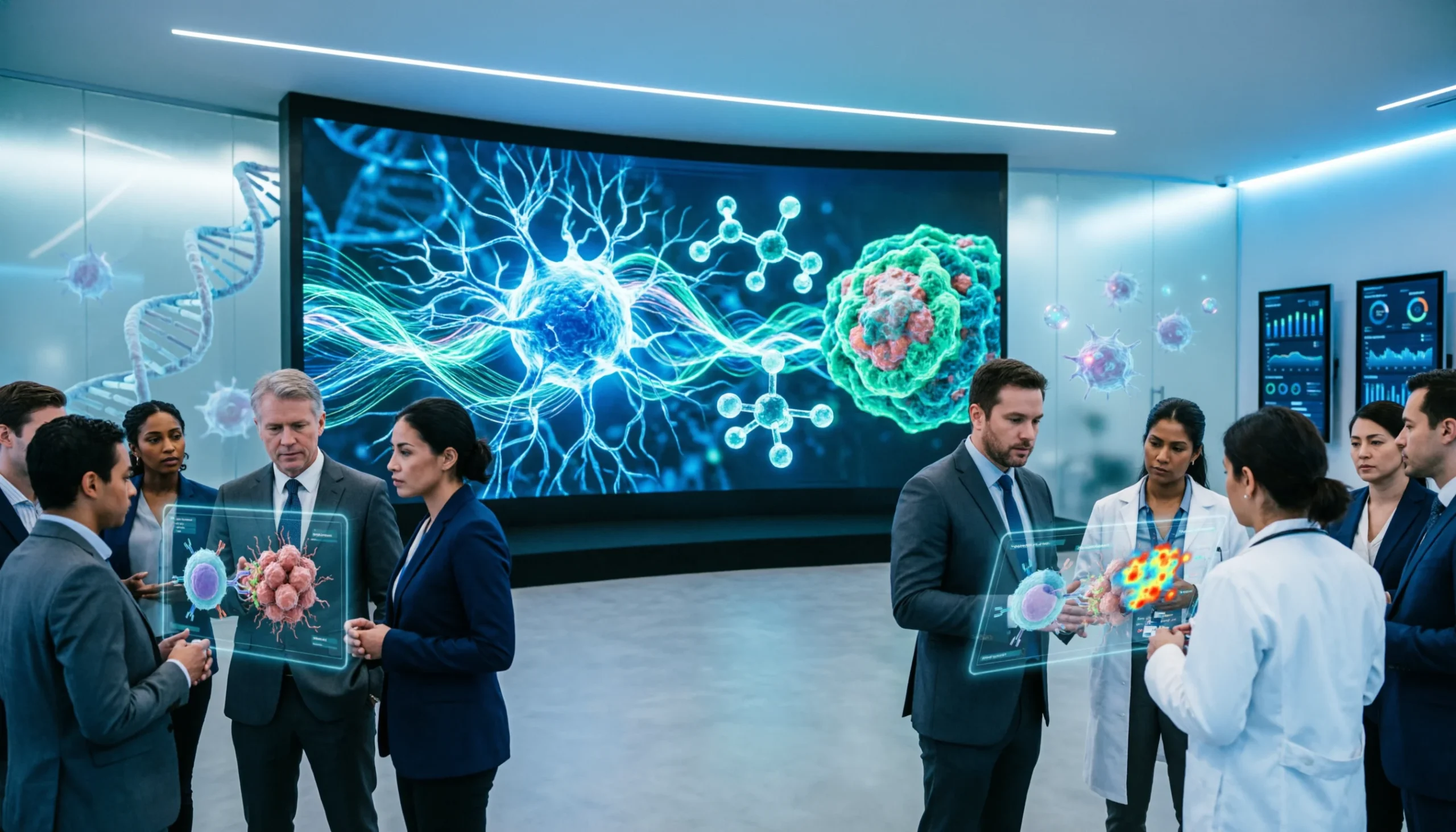
At PMWC 2026, BostonGene will present new data demonstrating how AI-driven analytics can decode the intricate cellular and molecular architecture of tumors. These insights enable clinicians and drug developers to better understand immune evasion mechanisms, identify predictive biomarkers, and select optimal combination therapies tailored to individual patients.
Dr. Fowler emphasized that the oncology field is now facing a data synthesis challenge rather than a data scarcity problem. According to him, the ability to transform high-dimensional molecular information into coherent, actionable clinical strategies is the defining hurdle of modern cancer care. By leveraging deep learning and multimodal AI models, BostonGene seeks to convert complexity into clarity—ultimately moving the field toward more predictable and personalized treatment outcomes.
Featured Presentation: Multi-Modal AI in Drug Discovery
One of the highlights of BostonGene’s participation will be Dr. Fowler’s featured presentation focused on harnessing multi-modal AI to transform drug discovery and development. In this session, he will explore how advanced computational models can integrate genomic alterations, immune cell composition, pathway activity, and spatial tumor architecture to generate novel therapeutic hypotheses.
Traditional drug development often relies on single biomarkers or limited datasets, which can oversimplify tumor biology and contribute to variable clinical outcomes. BostonGene’s integrated platform instead evaluates the full biological context of disease, identifying patterns that may predict response or resistance to therapy. This systems-level understanding has the potential to accelerate clinical trial design, improve patient stratification, and reduce costly late-stage failures.
By combining AI with deep biological expertise, BostonGene is helping pharmaceutical partners design smarter combination regimens and uncover new therapeutic targets within the tumor microenvironment.
AI + Data Science Showcase: Inside BostonGene’s Platform
During the AI + Data Science Showcase session on Wednesday, March 4, from 2:15 PM to 2:30 PM PST, Dr. Fowler will provide an inside look at BostonGene’s deep learning framework and its application in oncology. This presentation will highlight how the company integrates multiomic data to deliver a comprehensive immune and tumor profile for each patient.
The showcase will detail how AI models interpret gene expression patterns, immune infiltration characteristics, signaling pathway activation, and cellular interactions within the tumor microenvironment. These insights allow clinicians to move beyond broad treatment categories and toward precise therapy selection based on an individual tumor’s biological signature.
The session is expected to attract considerable attention from researchers and healthcare innovators interested in understanding how AI foundation models are being deployed in real-world oncology settings.
Checkpoint 2.0: Overcoming Resistance in Immunotherapy
Immunotherapy has revolutionized cancer treatment, particularly with the advent of immune checkpoint inhibitors. However, resistance—both primary and acquired—remains a major obstacle. During the panel discussion titled “Checkpoint 2.0 in Practice: PD-1+VEGF Wins, Resistance Salvage & Biomarker Gates,” Dr. Fowler will join a distinguished group of oncology leaders to discuss the next generation of combination strategies and biomarker-driven approaches.
The panel will examine the clinical success of PD-1 plus VEGF inhibitor combinations, as well as strategies to overcome resistance mechanisms that limit durable responses. A central theme will be the role of advanced biomarkers in guiding therapy selection and determining when combination approaches are most likely to succeed.
By applying multiomic profiling and AI-powered analytics, BostonGene contributes to identifying biomarker “gates” that help stratify patients and improve outcomes. Rather than treating checkpoint inhibitors as universal solutions, AI models can reveal which patients are biologically primed to respond and which may require alternative or additional interventions.
Targeting the Tumor Microenvironment in Practice
Another major discussion will center on “Targeting the Tumor Microenvironment in Practice: Biomarkers & Combos.” The tumor microenvironment is increasingly recognized as a dynamic ecosystem involving cancer cells, immune cells, stromal elements, and signaling molecules. Its complexity can both enable and hinder therapeutic response.
In this session, Dr. Fowler and fellow panelists will explore how advanced profiling techniques are being used to characterize TME composition and function. The discussion will address how multi-dimensional data—spanning immune cell states, cytokine networks, metabolic pathways, and spatial relationships—can guide the rational design of next-generation combination treatments.
BostonGene’s AI models are particularly well-suited to analyzing these intricate networks. By identifying patterns of immune suppression or activation within the microenvironment, the platform supports strategies that reprogram tumors to become more responsive to immunotherapy.
PMWC as a Catalyst for Precision Medicine
The Precision Medicine World Conference remains a premier platform for collaboration across academia, industry, and regulatory bodies. By facilitating dialogue between stakeholders, PMWC accelerates the integration of research discoveries into routine clinical care. BostonGene’s participation underscores its commitment to contributing scientific rigor, technological innovation, and clinical insight to this global conversation.
As AI becomes increasingly embedded in healthcare, transparency, validation, and clinical utility are critical. BostonGene’s presence at PMWC reflects not only technological leadership but also a dedication to collaborative progress in oncology.