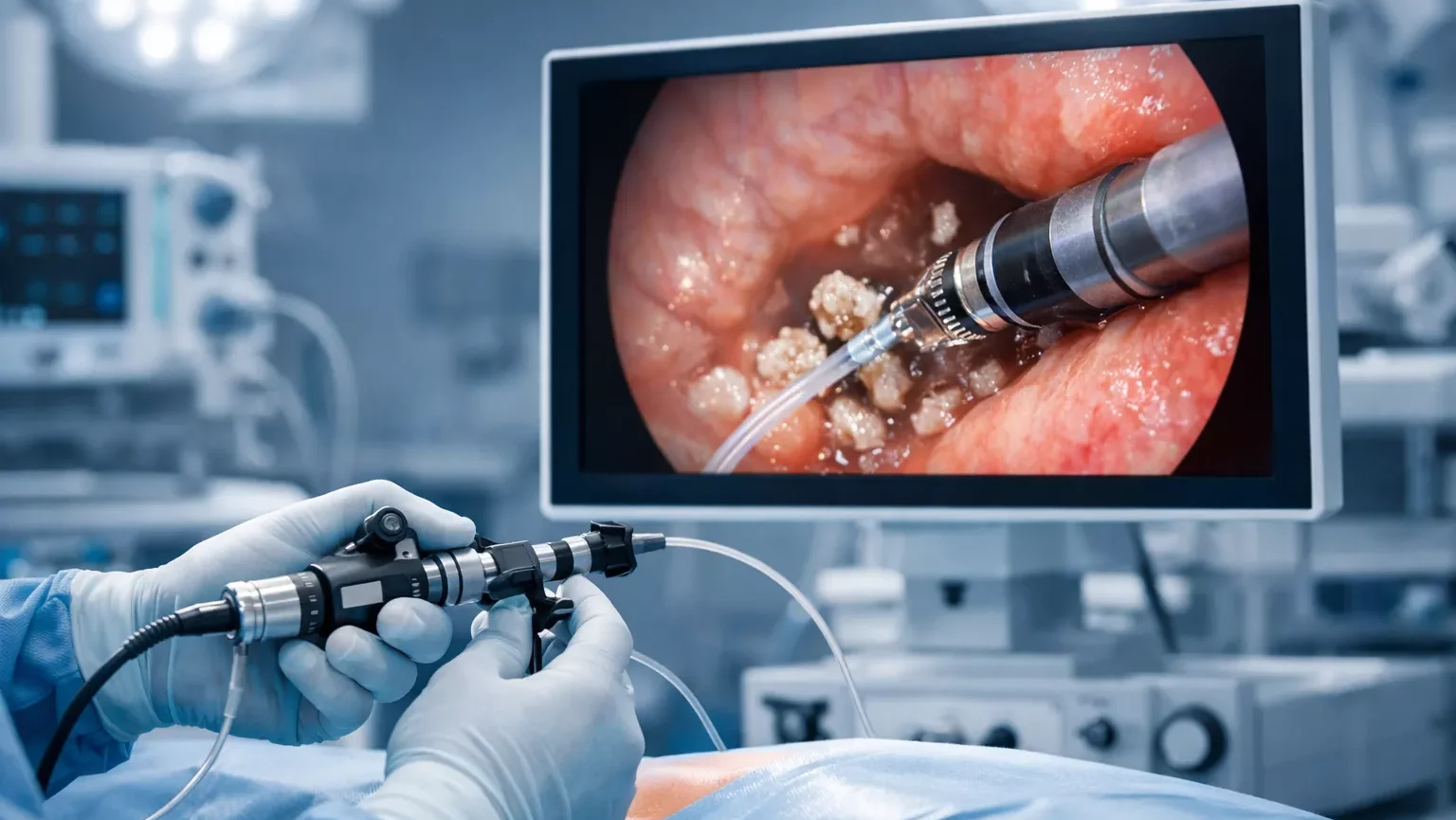
New clinical study results highlight significant reductions in residual stone volume and follow-up health complications with Calyxo’s CVAC System.
Calyxo, Inc., a medical device innovator transforming the treatment of kidney stones, has announced the peer-reviewed publication of pivotal clinical data from the CLEARANCE study and the ASPIRE randomized controlled trial (RCT). The findings, published in the Journal of Endourology, provide robust evidence supporting the clinical performance, safety, and long-term benefits of the company’s CVAC System used in the Steerable Ureteral Renal Evacuation (SURE) procedure.
Together, the CLEARANCE and ASPIRE studies represent a significant advancement in kidney stone management, demonstrating that aspiration-based technology can achieve consistently high stone clearance, very low residual stone volume (RSV), and meaningful reductions in long-term healthcare utilization.
CLEARANCE Study: High Stone Clearance and Strong Safety Profile
The CLEARANCE study was a prospective, single-arm clinical trial designed to evaluate the performance and safety of the second-generation, fully integrated CVAC System in removing renal stone fragments. The study enrolled 30 participants (32 renal units) with a mean total stone burden of 703.6 ± 835 mm³, or 14.8 ± 6.4 mm linear stone burden.
Topline results demonstrated:
- 96.2% mean stone clearance
- Mean residual stone volume (RSV) of 14.1 mm³
- Consistent performance independent of initial stone burden
- Effective clearance even in dense stones (Hounsfield Units = 1203)
These results underscore the system’s ability to deliver reliable outcomes regardless of baseline stone characteristics. Importantly, maintaining low RSV has increasingly been recognized as a key factor in improving long-term patient outcomes.
From a safety standpoint, the CLEARANCE study showed an excellent postoperative profile:
- Two urinary tract infections (6.7%), both resolved with intravenous antibiotics
- No cases of sepsis
- No Grade 3 adverse events
- No retreatments reported within 30 days
The safety outcomes were comparable to typical complication rates seen with standard ureteroscopy (URS), reinforcing the CVAC System’s favorable risk profile.
Improved Procedural Efficiency
One of the key advancements of the second-generation CVAC System is procedural efficiency. The mean procedural time in CLEARANCE was 46.4 minutes, compared with 66 minutes reported for the first-generation system.
This efficiency gain reflects the system’s fully integrated design, combining:
- Direct visualization
- Lithotripsy
- Microjet irrigation
- Continuous flow
- Active aspiration
Unlike traditional methods that rely on multiple devices, the CVAC System operates as an all-in-one platform, enabling simultaneous irrigation and aspiration through separate channels. This design not only supports more complete stone evacuation but also helps maintain safe intrarenal pressure and temperature during procedures—critical factors in minimizing complications.
According to study lead author Dr. Brian Eisner, Chair of Urology at Tulane University School of Medicine, the second-generation platform maintains the strong safety and efficacy profile of the original system while significantly enhancing procedural efficiency. These findings, he noted, support the CVAC System’s expanding role in modern stone management across a broad range of stone burdens.
ASPIRE Trial: First Long-Term RCT of Aspiration Technology
While CLEARANCE focused on short-term procedural outcomes, ASPIRE delivered groundbreaking long-term data. ASPIRE is the first randomized controlled trial to evaluate two-year outcomes of an aspiration-based stone removal procedure and the first to use healthcare consumption events (HCE) and stone events (SE) as primary endpoints.
The study enrolled 93 participants who underwent SURE with the CVAC System or standard ureteroscopy, with two-year follow-up data available.
Key findings included:
- Significantly fewer healthcare consumption events with CVAC (3 vs. 20, p=0.0004)
- 73% reduction in HCE risk (p=0.02)
- Longer event-free survival with CVAC compared to URS
Healthcare consumption events included emergency department visits, hospitalizations, and retreatments—events that carry substantial clinical and economic consequences for patients and health systems.
The dramatic reduction in these events suggests that minimizing residual stone volume at the time of the initial procedure can translate into durable long-term benefits.
Redefining Procedural Success: The Role of Residual Stone Volume
One of the most impactful insights from ASPIRE was the identification of residual stone volume as a statistically significant predictor of future healthcare consumption and stone-related events.
Notably:
- RSV was predictive of HCE and SE.
- Traditional metrics such as stone-free rate (SFR) and residual fragment counts were not predictive.
This finding challenges longstanding binary definitions of procedural success that classify patients as simply “stone-free” or “not stone-free.” Instead, ASPIRE supports a more nuanced, volumetric approach to outcome assessment.
The study’s conclusions align with recent recommendations from the American Urological Association (AUA), which emphasize that stone treatment outcomes are multifaceted and should incorporate volumetric measurements such as residual stone burden and percent stone clearance derived from imaging.
Dr. Thomas Chi, Professor and Chair of the University of Alabama at Birmingham Department of Urology and senior author of ASPIRE, emphasized that minimizing residual stone volume can significantly reduce unplanned hospital visits—events that carry both clinical risk and economic burden. By focusing on RSV rather than binary endpoints, clinicians may be able to improve both patient outcomes and system-level efficiency.
A Consistent Body of Evidence
The publication of CLEARANCE and ASPIRE in the Journal of Endourology marks an important milestone for aspiration technology in urology. Across sponsored and independent studies, the CVAC System has consistently demonstrated:
- High stone clearance rates
- Low residual stone volumes
- Performance independent of baseline stone burden
- Strong safety outcomes
- Meaningful reductions in long-term healthcare utilization
According to Calyxo’s CEO, Dr. Joe Catanese, the consistency of findings across studies is particularly compelling. He noted that achieving reliably low RSV translates into meaningful long-term clinical benefits and may define a more rigorous standard for procedural success in kidney stone treatment.
Implications for the Future of Kidney Stone Care
Kidney stone disease remains a highly prevalent and recurrent condition, often requiring repeated interventions. Traditional ureteroscopy has been effective in fragmenting stones, but residual fragments frequently remain and may contribute to recurrence, symptoms, and additional healthcare utilization.
The evidence from CLEARANCE and ASPIRE suggests that active aspiration technology—specifically the SURE procedure using the CVAC System—can address a critical gap in stone management by prioritizing complete volumetric clearance.
By integrating visualization, fragmentation, irrigation, and aspiration into a single system, the CVAC platform offers both procedural efficiency and enhanced clinical outcomes. More importantly, the long-term RCT data indicate that reducing residual stone volume can significantly decrease emergency visits, hospitalizations, and retreatments.
Taken together, the findings reinforce a patient-centered approach to kidney stone treatment—one that focuses not only on immediate stone clearance but also on sustained, long-term benefits. With peer-reviewed validation and randomized clinical evidence now available, aspiration-based technology appears positioned to become an increasingly important component of the evolving standard of care in urology.