
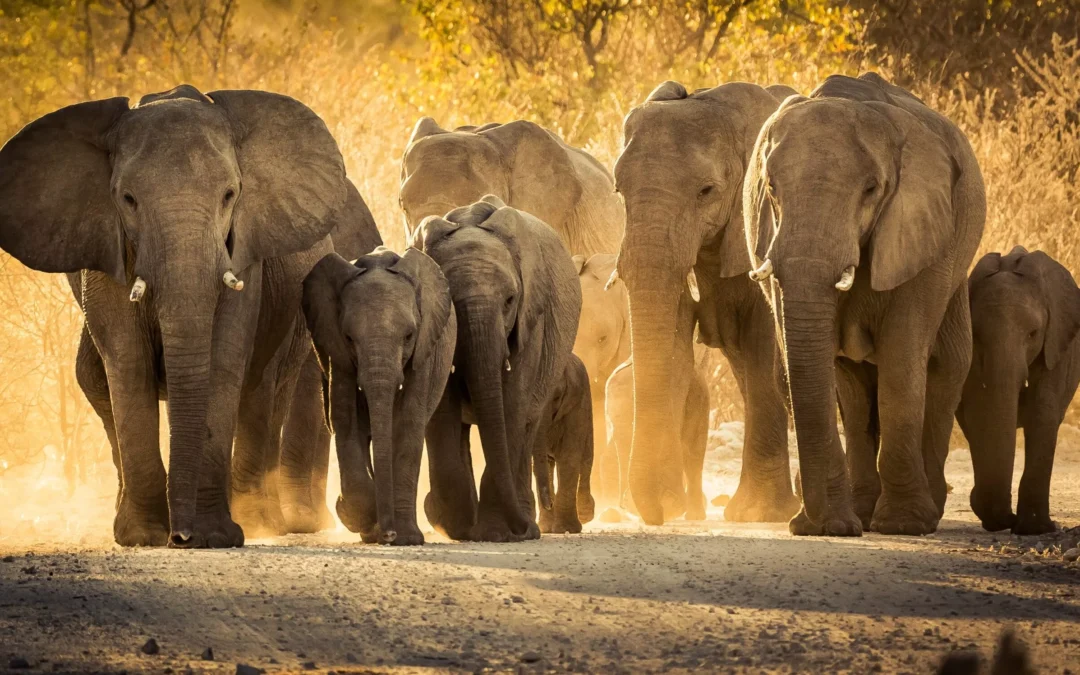
International Fund for Animal Welfare urges evidence-based monitoring to better understand population trends and guide long-term protection of African elephant populations.
As the global conversation around African elephant populations intensifies, conservation organizations are urging a more measured and science-driven perspective. Debates frequently swing between two extremes—some argue that elephants are becoming overabundant in certain regions and damaging ecosystems, while others warn that populations are dangerously close to collapse due to poaching and habitat loss. Amid these conflicting narratives, the International Fund for Animal Welfare (IFAW) is calling for a calmer, evidence-based approach to understanding the true state of Africa’s elephants. Rather than focusing solely on headline population figures, IFAW emphasizes the importance of examining long-term trends, ecological dynamics, and the complex relationship between elephants, their habitats, and the communities that share those landscapes.
Historically, Africa was home to millions of elephants. Before the colonial era, vast herds roamed freely across the continent’s savannahs, forests, and wetlands. However, centuries of hunting, ivory trade, and rapid land development have dramatically reduced their numbers. Today, estimates suggest that fewer than 500,000 elephants remain across Africa. This dramatic decline underscores the urgency of thoughtful and effective conservation strategies.
One of the most significant efforts to understand elephant populations across the continent was the Pan-African Great Elephant Census, the most comprehensive aerial survey of African savannah elephants ever conducted. Covering 18 countries, the census recorded approximately 352,271 elephants and revealed a worrying 30 percent population decline between 2007 and 2014. Much of this loss was attributed to illegal poaching for ivory, which continues to threaten elephants in many parts of Africa. These findings drew global attention and highlighted the seriousness of the challenges facing the species.
However, while large-scale surveys provide important snapshots of elephant numbers, conservation scientists caution that population totals alone cannot capture the full picture. Long-term ecological research conducted by the Conservation Ecology Research Unit (CERU) at the University of Pretoria has offered deeper insight into elephant population dynamics. Over a period of 25 years, researchers closely monitored 50 different elephant populations across Africa. Their findings revealed that many populations were actually stable, while some were even increasing.
Expanding the analysis to more than 100 populations across the continent, CERU researchers concluded that conservation decisions should not be based purely on overall population counts. Instead, they should consider broader ecological factors such as habitat availability, landscape connectivity, and the impact elephants have on their surrounding environments. In other words, where elephants live and how they move across the landscape often matters more than the total number of animals recorded in a survey.
Azzedine Downes, President and CEO of IFAW, has emphasized that the complexities of elephant conservation cannot be reduced to a single statistic. According to Downes, the long-term survival of elephant populations depends on several key factors: ensuring elephants have access to connected habitats, maintaining strong protection against poaching, and supporting the communities that live alongside wildlife. When these conditions are in place, elephant populations can recover and stabilize naturally over time.
The issue of habitat connectivity is particularly important. In some protected areas, especially fenced or isolated reserves, elephant populations may appear to grow rapidly. Without the ability to move freely across broader landscapes, elephants can concentrate in limited areas, leading to concerns that they may damage vegetation or disrupt local ecosystems. However, many conservationists argue that this problem is largely the result of artificial boundaries that restrict natural movement.
In healthy ecosystems, elephants historically traveled vast distances in search of food, water, and seasonal resources. These movements helped balance populations across large regions and prevented localized overpopulation. Re-establishing wildlife corridors and reconnecting fragmented habitats can restore these natural migration patterns. When elephants are able to move freely between protected areas, populations tend to stabilize and ecosystems remain more balanced.
Another key factor in understanding elephant population trends is their biology. Elephants reproduce slowly compared to many other mammals. Female elephants typically begin reproducing around the age of 12 or 13 and give birth roughly once every four years. Even under ideal conditions with abundant food and minimal threats, elephant populations rarely grow faster than about five percent per year. This slow reproductive rate means that losses from poaching or habitat destruction can have long-lasting consequences.
When adult elephants—particularly experienced matriarchs and breeding females—are killed by poachers, the social structure of elephant herds can collapse. The loss of these key individuals disrupts family groups and removes valuable knowledge about migration routes, water sources, and survival strategies. Scientific research indicates that it can take decades for affected populations to recover. In some cases, it may take 24 years or more for a disrupted elephant population to regain a stable age structure.
Despite these challenges, elephants have demonstrated remarkable resilience when given the opportunity to recover. Research suggests that many protected areas across Africa could support significantly larger elephant populations than they currently host. The main barriers preventing this potential growth are not ecological limitations, but rather human-related threats such as poaching, habitat fragmentation, and conflicts between people and wildlife.
Human-elephant conflict is a particularly complex issue in many rural communities. As human populations expand and agricultural lands spread into traditional elephant habitats, encounters between people and elephants have become more frequent. Crop damage, property destruction, and safety concerns can create tension between communities and wildlife conservation efforts. Addressing these challenges requires collaborative solutions that support both people and animals.
IFAW’s conservation strategy focuses heavily on promoting coexistence between humans and elephants. By working with local communities, governments, and conservation partners, the organization aims to develop solutions that reduce conflict while protecting wildlife. These efforts include community-based conservation programs, improved land-use planning, and the creation of wildlife corridors that allow elephants to move safely across landscapes without passing through densely populated areas.
One of the key initiatives driving IFAW’s approach is the Room to Roam program. This long-term conservation strategy is built upon more than two decades of research conducted by the late Professor Rudi van Aarde and his team at CERU. Their work demonstrated that reconnecting fragmented habitats is one of the most effective ways to support healthy elephant populations.
Room to Roam focuses on securing and restoring critical habitats across East and southern Africa. By linking protected areas and safeguarding migration corridors, the program aims to create vast, connected landscapes where elephants can move naturally and safely. This approach not only benefits elephants but also supports broader ecosystem health, as elephants play a crucial role in shaping their environments.
Often referred to as “ecosystem engineers,” elephants help maintain the balance of African savannah ecosystems. Their feeding habits open up dense vegetation, allowing sunlight to reach the ground and encouraging plant diversity. They also disperse seeds across long distances, contributing to forest regeneration and maintaining healthy habitats for countless other species. Protecting elephants therefore has far-reaching ecological benefits beyond the species itself.
Ultimately, IFAW believes that the debate surrounding elephant numbers should move beyond simplistic narratives about overpopulation or decline. Conservation challenges are rarely black and white, and the reality of elephant population dynamics is far more complex than a single statistic can convey. Effective conservation requires long-term scientific research, adaptive management strategies, and strong partnerships with local communities.
By grounding conservation policies in science and focusing on habitat connectivity, anti-poaching efforts, and community engagement, organizations like IFAW aim to secure a future where elephants continue to roam freely across Africa’s landscapes. Protecting the elephants that remain today is essential not only for preserving one of the world’s most iconic species but also for safeguarding the health and resilience of Africa’s ecosystems for generations to come.